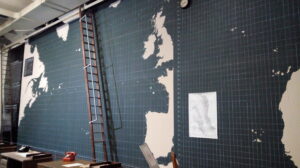
The Operations Room closed on 15th August 1945 and the history of this place was unknown until relatively recently.
With the museums now re-opening and the kids back at school, I took the opportunity to visit a museum which I had never been to before. In fact, I hadn’t realised it was in Liverpool until relatively recently. It was one of those places which I always made plans to visit but could never find the time. Covid may be a lot of things but if I was to find a positive from this pandemic, it certainly focusses the mind, no longer will I put things off if I have the opportunity to do them.

For those with children, there is plenty of things to pick up and handle, as well as other activities, including the option to dress up.
Prices and visiting the museum
Like many museums now, you are advised to book in advance on the website, though for Western Approaches you aren’t given a set time slot. Ticket prices are reasonable, when you realise that you aren’t just buying a single entry. You’re in fact buying a year’s membership, allowing you to visit whenever you like over the following 12 months. Adults £13.50, Concessions £11.50, Children 5-16 £8.00 with children under 5 able to enter for free. Groups (10 or more people) cost £11.50 per person. One thing which I thought was quite sweet is that the museum will allow free entry to those who served in WWII, and give them a gift as well.
So, what is Western Approaches? It’s a WWII underground bunker which was built below Derby House in Liverpool. The Royal Airforce, Royal Navy and Royal Marines monitored enemy convoys during the Battle of the Atlantic and it was also staffed by members of the Women’s Royal Naval Service. As is to be expected from a secret bunker, it’s situated under an unassuming building and from the outside could easily be missed. Home to three hundred war time staff it’s only once inside do you realise how vast this bunker actually is.
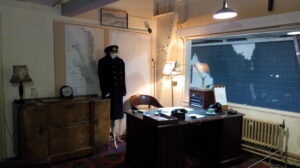
The bunker had been forgotten about for decades and was saved from its dilapidated state in 2017 by Big Heritage, restored to how it looked during the war.
The bunker had been forgotten about for decades and was saved from its dilapidated state in 2017 by Big Heritage who then restored it to how it looked during the war. Further restoration was still ongoing in 2020.
Having booked in advance, it was simply a case of picking a convenient day. On arrival you’re greeted by a staff member on reception. Due to social distancing requirements, they implemented a one-way system, however I could imagine that the system would work well even in normal circumstances, during busy times, due to the narrow corridors.
The museum does provide a number of guided tours which can last between an hour and half to two hours in length, for large groups. The details of the tours on offer can be found on the website. Otherwise you are able to go on a self-guided tour, which in itself, takes a minimum of an hour and fifteen minutes.
When I went, I went with my family and the three of us had the place to ourselves, with the exception of the staff milling about. There’s plenty to look at. On arrival at reception, you are given a mock-up of a security pass and there are four stamps dotted around the bunker for you to collect. For those with children, there’s lots of things to pick up and handle, as well as other activities, including the option to dress up. There’s also plenty of hand sanitiser available, which you are strongly advised to use.
It’s worth taking your time to have a look around. I doubt even we saw everything that was on offer during the time we were there. I suppose that’s the joy of having a ticket you can use for a year; you can go back again.
By its very nature the bunker is not easily accessible if you require the use of a wheelchair or are using prams. Prams, mobility scooters and wheelchairs can be left in reception if you so wish. The only access to the bunker is via narrow and steep staircases. If you require seating there is some dotted around the museum and apparently, they even have collapsible stools which can be carried around with you. Toilet facilities are situated near reception. If you’re unable to visit in person there is a virtual tour available.
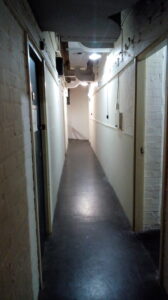
Home to three hundred war time staff it’s only once inside do you realise how vast this bunker actually is.
The Operations Room closed on 15th August 1945 and the history of this place was unknown until relatively recently. The fact you can walk around and interact with objects, read and listen to the personal stories of those who worked there, really makes the history tangible. On leaving the museum I was left feeling humbled but with a great sense of pride. Not only for the role the city of Liverpool played in WWII but for those individuals who worked long hours underground without any expectation of thanks. Unable to tell anyone about the important work they did. Now, we have names and faces to some of those who worked there and finally their stories are being told.
Further information
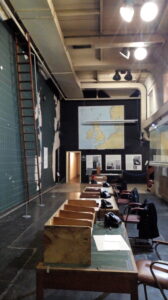
The museum receives no funding other than the money made through visitor admissions. It’s a precarious time for all museums currently and I would urge all who are in a position to visit, to please do so. Not only is it an impressive place to visit but you will also ensure that the bunker and its history remains for future generations to enjoy. The museum is open 7 days a week from 10am – 5pm with last admissions at 4pm.
Further information can be found on their website.
https://liverpoolwarmuseum.co.uk/